Prime Eyesight Hospital Near Me Golpark-Gariahat,Kolkata 700029

|

Prime Eyesight Hospital Near Me Baguihati, Vip Road, Kolkata 700059

Best Eye Care Kolkata West Bengal All cashless eye surgery facilities available Top Eye Hospital In Kolkata
Best Eye Care Kolkata

Essential Tips for Choosing a Qualified Eye Surgeon

Selecting a good eye surgeon is a fundamental factor toward enhanced vision and healthy eyes. Whether you are considering laser eye surgery in Kolkata or another procedure, the surgeon’s skills, experience, and patient care are key to achieving safe, successful results. With all the options at your disposal, take your time to research and make a comparative analysis to make you feel even more confident about your selection.

An experienced eye surgeon is not only someone qualified and educated to do the job, but one who also has a high rate of successful results and happy patients. Of course, it’s not just about having the knowledge; good bedside manner and a patient-friendly atmosphere can be just as important. By knowing just what to look for and asking the right questions, you can be a smart consumer and protect your peepers.

Various Tips for Choosing a Qualified Eye Surgeon

Choosing the right eye surgeon is important to your eye health and to ensure that you get the best results from the surgery. What you need is someone who is qualified, experienced, and has excellent skills, as well as being patient-friendly.

Verify credentials and board certification

Ensure that you find a board-certified ophthalmologist. A board-certified ophthalmologist is one who has completed all the necessary education, training, and certification to provide eye care services. Additionally, you need to ensure that the doctor is licensed to practice within your state. All these tips will guide you in selecting a professional and trusted ophthalmologist from a top eye care hospital in Kolkata to provide your treatment services.

Assess technology and facilities

Contemporary eye surgery relies heavily on the best technology around in matters of safety and precision. A good surgeon will be able to use the latest diagnostic procedures and techniques. The surgical facilities should be properly accredited and meet the highest requirements of cleanliness and safety for all patients.

Schedule a consultation

A consultation allows you to gauge how effectively the surgeon explains things and how they attend to you as a patient. Pay attention to how well the surgeon explains things, describes the process, explains the risks, and answers your questions. The best eye specialist in Kolkata will reassure you, as well as keep you well-informed, without pressuring you.

Consider comfort and trust

Intuition is important too, and you should be comfortable with your surgeon. You should have a good deal of confidence and faith in your surgeon, first and foremost, due to their qualifications and experience. It is also vital that you are comfortable enough to voice whatever concerns you may have. Having a good relationship with your doctor is a way to ensure good communication, as well as assuring yourself of a smooth surgical experience.

Evaluate experience and specialization

Not all eye surgeons have the same skills; their ophthalmology specialties can vary. Some focus on LASIK and refractive surgery to help patients stop using glasses or contacts, while others specialize in cataract surgery to improve vision clarity. There are also individuals who concentrate on tackling issues of glaucoma and retinal problems. When selecting an eye surgeon, it is crucial to ask about their hands-on experience and success rate concerning the specific procedure you require. In most cases, the more experienced surgeons result in better outcomes. Having information concerning the surgeon can make you feel comfortable about making decisions regarding your eyes.

Conclusion

When selecting a qualified eye surgeon, do your homework and consider it well. This may involve considering their qualifications, the extent of their experience, types of equipment, and their mode of communication with you. By doing this, you will be able to trust yourself when selecting one, knowing it’s for your own good.
How Delaying Cataract Care Can Put Your Retina at Serious Risk

Most people think that cataracts are a simple loss of vision that can be cured through surgery. But people fail to notice the most vital part that happens behind that cloudy lens. According to a recent report, cataract accounts for 66% of blindness cases due to delayed diagnosis and the surgical process. This report indicates that delayed cataract treatment can lead to permanent vision loss, which is a significant concern. Thus, when an experienced eye specialist detects your cataract, do not waste your time; experience the best cataract surgery Kolkata.

Now, a vital question is what happens in the retina due to the delay in cataract treatment? At first, your retina gets affected, which stays behind the cloudy lens. As the retina is the most delicate and essential part of your eyes, delayed cataract treatment can cause retina damage and permanent vision loss.

Let’s explore this blog to understand how delaying care for a character can put your retina at serious risk.

Understand the Delicate Relationship between the Lens and the Retina

Whether it is an artificial glass lens or your eye’s natural lens, both can form an image when light passes through them. When the window becomes cloudy, can you still see the image? The same concept applies to the eye’s lens. When the lens becomes cloudy, you cannot see anything properly. A cataract does not damage the retina directly, but it blocks the light from entering the eye and damages the visual signal quality. Over time, this situation can reach the retina, worsening the condition.

Especially, people who have diabetes and high blood pressure must visit the top retina specialist in Kolkata. If the doctor find vision problem in your eyes and feels confused whether a cataract has occurred or not, the doctor will immediately refer you to a cataract specialist.

What Do You Mean by Cataract?

A cataract is a serious eye condition where the eye’s natural lens becomes cloudy due to the accumulation of lens proteins. Before a cataract occurs, the light passes smoothly through the lens to the retina, enabling clear vision. When the light does not pass through properly, vision may appear blurred. A cataract can affect both eyes, and its symptoms develop over time. Initially, you may not notice symptoms, but as the clouding increases, daily visual tasks become problematic, and you may need immediate surgery.

How Delaying Cataract Treatment Puts Your Retina at Risk

After a diagnosis of cataract from the best ophthalmologist in Kolkata, try to conduct the cataract surgery as soon as possible. Delaying cataract treatment can put your retina at risk.

1. Retinal disease can stay hidden

As cataracts become dense, it becomes difficult to examine the retina, and conditions such as diabetic retinopathy, macular degeneration, and retinal swelling are harder to detect. These undetected retinal problems can lead to serious long-term eye problems and damage your vision.

2. Massive risk for diabetes patients

Diabetes can affect both the lens and retina. When cataract surgery is delayed, the chance of retinal blood vessel damage increases significantly. Apart from that, visual recovery becomes complicated, which can affect your vision. That’s why diabetic patients must consult with the top retina specialist for the best advice.

3. Major cataracts complication damage retina

When cataracts become complicated, retinal imaging accuracy decreases, and the surgical process is hampered.

4. Delayed cataract care causes visual damage

A healthy retina is vital for great vision. If retinal problems develop due to your delayed cataract treatment, your vision may not fully return after cataract surgery. That’s why you need to visit the best eye clinic in Kolkata for a retinal health check-up before and after cataract surgery.

Conclusion

At the end, we must say that a healthy retina is the foundation of great vision. If you really want to ensure healthy eyesight, do not experiment with eye specialists. Try to choose a trusted, reliable eye hospital, such as Pushpanjali Eye Care Hospital, for comprehensive eye care. With our experienced, highly skilled doctors, we can ensure your cataract surgery proceeds smoothly and on time, and safeguard your retina from minor complications.

Why Regular Retina Screening Is Essential for Diabetics and Eye Health

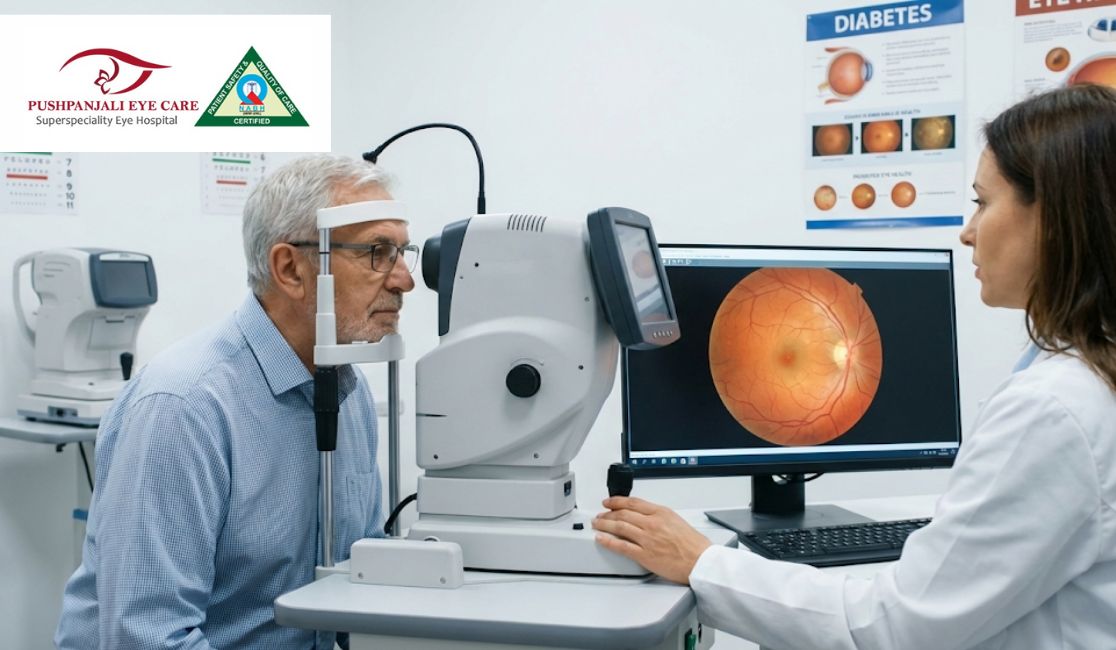
People who are spending their lives with diabetes need some extra care to ensure their health and well-being. As we all know, when a person suffers from diabetes, the eyes and kidneys are two vital aspects that are more likely to be damaged. In such a critical scenario, taking care of your eyes is a vital task for diabetes patients. One of the most common areas of the eye affected early is the retina, the light-sensitive layer at the back of the eye that plays a vital role in clear vision.

The major concern about the retina is that it never shows early signs of eye damage, but you will experience vision problems at the last stage. That’s why regular retinal screening by the best retina specialist in Kolkata is highly essential for diabetes patients. It not only ensures your eye health but also safeguards your vision.
Let’s explore this blog to understand why regular retinal screening is essential for diabetics and maintain eye health.

Know the Connection between Diabetes and Retinal Health

Diabetes can damage the tiny blood vessels in the retina and lead to major eye problems such as diabetic retinopathy, diabetic macular edema, and other eye disorders. High blood sugar can weaken the blood vessels over time, causing swelling and abnormal growth of new blood vessels. These situations may not be visible at the early stage, but become a major eye problem after a certain period.

Without any pain, discomfort, or vision problems, retinal disorders can damage your vision completely over time. In such a situation, if you really want to protect your eye health, you must try to visit the top ophthalmologist in Kolkata for a valuable consultation about your retina screening.

Why Is Regular Retina Screening Vital for Diabetics?

If you are suffering from diabetes and want to ensure your eye health, don’t forget a retina screening at the best eye hospital in Kolkata. Let’s discuss why regular retinal screening is vital for diabetics.

1. Early detection before vision loss

With early diagnosis through retinal screening, diabetes patients can protect their vision. Many retinal conditions become unmanageable due to excessive diabetes, and patients suffer from vision loss. But with regular screening, diabetic patients can detect retinal problems early and safeguard their eye health from vision loss.

2. Prevent irreversible damage

Advanced diabetic retinal disease can cause permanent vision loss, which is impossible to cure. But you can prevent this situation through regular eye checkups with modern treatments such as laser therapy, injections, or the latest surgical procedures.

3. Monitor eye health regularly

Diabetes is a major concern for eye health that can adversely impact the eye. A routine retinal check-up can detect minor changes in your eyes and help resolve issues with modern eye treatment. If your eye specialists feel the need for LASIK eye surgery for any critical eye problem, you should have a healthy retina. Thus, before undergoing the top LASIK eye surgery in Kolkata, try to improve your retina health to ensure the effectiveness of LASIK surgery for any critical eye problem.

4. Peace of mind

When you get confirmation from your doctors that your retina is healthy, you will definitely get a sense of peace of mind, which is also highly effective for your diabetes. As we all know, excessive stress can exacerbate diabetes, which is harmful to your health.

Conclusion

If you are looking for a specialized eye care centre for comfortable retinal screening, visit Pushpanjali Eye Care Hospital. With our advanced diagnostic tools and patient-friendly environment, we can ensure a professional retina screening facility. If you have diabetes, try to book a schedule for retina screening with our trusted eye specialists and control your eye health.

How Antioxidants Contribute to Better Eye Health

Every day, our eyes take a beating from things like sunlight, screens, pollution, and just getting older. All that stress piles up and triggers free radicals, tiny troublemakers that chip away at our eye tissues. That’s how you end up with vision issues or age-related eye problems down the line. Antioxidants step in here. They knock out those harmful molecules and help keep the important parts of your eye, like the retina and lens, in good shape. If you have any issues with your eyes, visit the best Eye Hospital in Kolkata for further procedures.

Antioxidants play a big role in keeping your vision sharp and protecting your eyes as you get older. You’ll find them in a bunch of fruits, veggies, and other healthy foods. Honestly, if you want to keep your eyes healthy and your vision comfortable as you age, loading up on antioxidant-rich foods just makes sense.

Various Ways Antioxidants Contribute to Better Eye Health

Antioxidants keep your eyes healthy. They fight off free radicals, slow down aging, and help you see clearly. You’re less likely to run into common eye problems if you get enough of them. So, they really matter if you want to protect your vision for the long haul.

Protect against oxidative stress

Antioxidants jump in and protect our eyes from free radicals, those annoying things that show up thanks to sunlight, pollution, or staring at screens for hours. Our eyes deal with a lot, day in and day out. Antioxidants step up, making sure our vision stays sharp and our eyes feel good.

Help prevent cataracts

Vitamins C and E step in to shield the proteins in our eye lenses from damage caused by oxidation. They go after free radicals, those troublemakers that speed up lens clouding, and help slow the whole process down. This helps keep our vision clear and vibrant. If things are still not going well, then laser eye surgery in Kolkata is the best option.

Reduce eye inflammation and dryness

Antioxidants help manage inflammation and support tear production, thereby reducing irritation, redness, and discomfort associated with dry eyes. By fighting oxidative stress, these compounds not only soothe the eyes but also improve overall eye health and comfort.

Improve blood circulation to the eyes

Flavonoids do a lot for your blood vessels; they actually help make them stronger. They bring oxygen and nutrients right to the fragile tissues in your eyes. That’s what keeps your vision clear and your eyes feeling alive.

Support long-term retinal health

Antioxidants play a big role in keeping our eyes healthy. They look out for photoreceptor cells, which help us see sharp images and tell colors apart. Free radicals, those troublemakers, can mess with these cells and make our vision worse. Antioxidants step in and shut them down, which keeps our eyesight sharp and the world’s colors bright. With the help of a good eye specialist, you can overcome any kind of eye issue that you are going through.

Support healthy night vision

Vitamin A and beta-carotene are important for making rhodopsin, a pigment our eyes need to see in low light. This compound helps improve night vision, which allows us to see and enjoy our surroundings even when it’s dark.

Conclusion

They help with eye strain, protect your retina and lens, and cut down the risk of eye issues as you get older. If you want to keep your vision clear and comfortable, make sure you’re eating foods rich in antioxidants. It really makes a difference as the years go by. Making these foods a priority is not just helpful; it is essential for maintaining good eye health over time.

Blue Light, UV Rays, and Your Lens: What Exactly is Happening?

Although your eyes are amazing organs, they are extremely delicate. Your natural lens filters light daily to improve your vision. This continuous exposure, however, has a price. You may safeguard your vision for years to come by being aware. Know how blue light, UV rays, and other variables contribute to cataract formation. So, when it’s time, you can contact the best retina specialist in Kolkata.

As you age, cataracts are mostly inevitable. Still, you can decrease their progression by being aware of risk factors. UV protection is an investment in long-term vision health. This is not only for comfort. You can help maintain the quality of your natural lens. You can also possibly postpone the need for surgery by years. You need to combine protective eyewear with wise lifestyle choices. The protection you offer now will be appreciated by your future self.

What Exactly is Happening to Your Lens?

This article talks about the effect of UV rays and blue light and tells you exactly what you can do to lessen the damage to your lens.

The Effect of UV Rays

The water and crystallin proteins that make up your eye’s lens are precisely arranged to maintain transparency. High-energy visible light and UV radiation cause oxidative stress. This damages cellular structures by releasing unstable chemicals known as free radicals. The cloudiness known as cataracts is the result of the crystallin proteins. They clump together over time due to oxidative damage.

This is because UV photons have enough energy to break chemical bonds in lens proteins. They are very harmful. The majority of UVB radiation is absorbed by the cornea and lens. Whereas UVA radiation enters the eye more deeply. Damage from this cumulative exposure builds up slowly over decades. Then vision issues manifest, much like a slow burn. This is when you search for a good eye specialist near you.

Blue Light Effect

With our increased screen time, blue light has become a popular topic. Yet, the science is more complex than marketing claims imply. Natural sunlight contains significantly more blue light than your computer screen or smartphone. Sources of high-energy blue light from large screens can contribute to oxidative stress in the lens. Here is the thing, however. Outdoor activities without eye protection provide a far higher risk. Even if exposure to digital devices hasn’t been conclusively linked to increased cataract formation. The best eye hospital in Kolkata warns you about blue light.

Additional Factors and Their Effects

Light exposure is important; cataract formation is also greatly influenced by a number of additional factors:

  1. Age: By the time they are 80 years old, people today have cataracts or have already had cataract surgery. Everyone is impacted by this natural aging process. However, this timing varies greatly.
  2. Smoking: By adding more oxidative stress and harmful substances to your body, smoking speeds up the development of cataracts. According to studies, heavy smokers are two to three times more likely to acquire cataracts than non-smokers.
  3. Diabetes: Excess glucose produced by the disease leads to sorbitol. This is a chemical that builds up in the lens. It attracts water, which damages the lens’s structure. Diabetics may acquire cataracts more quickly and frequently at younger ages.

What To Do?

When you’re outside during the day, use high-quality sunglasses. This completely blocks UVA and UVB radiation. By obstructing light from the sides, wraparound models provide extra protection. Hats with wide brims offer additional protection by lowering UV exposure by as much as 50%.

Keep up a diet rich in nutrients and antioxidants. Leafy greens like spinach and kale include lutein and zeaxanthin. It builds up in the lens and helps prevent oxidative damage. Lens health is also supported by vitamins C and E.

Conclusion

Take proactive action to manage underlying medical issues. Cataract development can be considerably slowed by controlling your blood sugar levels. Contact your best retina specialist in Kolkata. To identify early changes, schedule routine eye exams. Your eye care specialist can identify early indicators and track the development of cataracts, even though you cannot feel them. Check out Pushpanjali Eye Care, the best for you and your eyes.

The 3 Main IOL Materials: Silicone VS Acrylic VS PMMA

One of the most popular medical procedures in the world is cataract surgery. It helps millions of individuals regain their vision every year. The intraocular lens (IOL) is an artificial lens implanted to replace the clouded natural lens. This is at the centre of this process. It helps in deciding surgical results and long-term patient satisfaction. The material of the IOL is just as significant as the surgical procedure. The three main IOL materials on the market today are acrylic, silicone, and polymethyl methacrylate (PMMA). Each of these has unique qualities that make it appropriate for the best retina specialist in Kolkata. The choice of this material depends on a number of factors. The patient’s anatomy is one of the prime factors; this is the structure of their eye and what it needs. Then, lifestyle requirements are another important factor. Does the patient do activities that are heavy on the eyes? Are they into sports? Are they in the medical profession? This also brings in the likelihood of future eye procedures. Another significant concern is financial: What is their budget? All these play a role in the choice of IOL material.

The 3 Main IOLs: Which One Do You Choose?

Be it PMMA, Acrylic, or Silicone, each has its own advantages and disadvantages. This article guides you through them so you can make a well-informed choice.

PMMA

Sir Harold Ridley initially utilized PMMA for IOLs in 1949. PMMA lenses are strong and have a stellar history lasting more than 70 years because they are made of a hard substance. If you are searching for the best eye hospital in Kolkata, you need to look into PMMAs. These lenses are very biocompatible. This means that they rarely induce inflammatory reactions in the eye, and they provide excellent optical clarity.

But PMMA’s main drawback is also its stiffness. These lenses require a wider surgical incision (usually 5.5-7mm) for implantation since they cannot be folded. Compared to foldable options, this leads to a higher risk of problems, longer healing durations, and increased postoperative astigmatism. Furthermore, PMMA lenses are not as suitable for multifocal or toric designs as contemporary materials.

Silicone

Silicone has been dominating the cosmetic industry for quite some time. The first foldable lens material, silicone IOLs, revolutionized cataract surgery in the 1970s. Because of their flexibility, implantation may be done with smaller incisions (about 3 mm). This leads to a quicker recovery, less astigmatism, and fewer problems. Surgeons can easily handle and place silicone lenses because of their exceptional softness and pliability.

Despite these benefits, silicone has many disadvantages. This is the information you need before you search for a good eye specialist near you. The compound tends to stick to silicone oil. This is occasionally utilized in retinal procedures. For individuals who may need vitreoretinal surgeries in the future, silicone IOLs are therefore inappropriate. Furthermore, over time, silicone lenses are more likely to develop deposits and clouding. Especially calcium deposits in some patients.

Acrylic

Since its introduction in the 1990s, acrylic materials have been the gold standard in contemporary cataract surgery. They are both hydrophilic and hydrophobic. The most widely used acrylic lenses are hydrophobic because they provide the best possible compromise between flexibility, optical quality, and biocompatibility. Your best retina specialist in Kolkata will ensure you benefit from this.

These lenses provide quick healing with little induced astigmatism. Since they can be folded and placed through incisions as tiny as 2.2 mm. By preventing cell attachment, acrylic IOLs dramatically lower posterior capsule opacification (PCO). This is often known as “secondary cataract.” Additionally, they work well with all kinds of intraocular surgeries.

Conclusion

For the best choices in cataract surgery, contact Pushpanjali Eye Care.

The Story of Protein Unfolding: What Exactly is Happening to Your Eye?

When you consider cataracts, you may worry about the hazy eyes of senior family members. You wonder about a “good eye specialist near me”. Yet, beneath that milky appearance is an intriguing molecular drama. This is because proteins that were supposed to be completely transparent for a lifetime gradually unfold and aggregate. It goes beyond academic curiosity to comprehend how proteins unfold in cataracts. The tale of the cataract serves as a reminder that our bodies are always in molecular motion. You can never know all that is within your body that is constantly moving, transforming. With proteins folding, unfolding, and attempt to preserve order. All in the face of the unrelenting pull of bodily entropy. This struggle is especially evident in the lens. It is literally obscuring our eyesight when the proteins ultimately lose their war with time.

The Story of Protein Unfolding

The lens of your eye is a remarkable example of biological engineering. Before you search for cataract surgery cost in Kolkata, you must know what it entails.

The Fascinating Design of Your Lens

Alpha, beta, and gamma crystallins are the three primary kinds found in the lens. Molecular chaperones, alpha-crystallins, aid in preserving the other proteins’ correct shapes. The majority of the lens’s refractive power comes from beta and gamma crystallins. When combined, they produce one of the human body’s most protein-rich environments.

How Proteins Lose Shape

When these crystallin proteins begin to unfurl, the cataract tale begins. This is when you have to look for the best eye hospital in Kolkata. Proteins are folded into distinct three-dimensional structures that dictate their function. This is a lot like origami. Delicate connections between various protein chain segments preserve this structure. These bonds are attacked over time by a number of stressors. These include UV light from years of sun exposure and oxidative damage from free radicals. Some other factors include pH variations and basic mechanical stress from your lens’s continuous focusing.

Hydrophobic (water-repelling) areas that were supposed to remain concealed in the protein’s core are revealed as crystallins unfurl. This causes your major problem. Proteins clump together in ways they weren’t meant to because of these sticky patches. Disordered aggregates are formed from initially ordered, soluble proteins.

The Cascade Effect

When these tiny protein clumps get bigger, that’s when the major problems start. Clumps large enough to scatter light are created as additional unfolded proteins adhere to one another. This is what gives a cataract its hazy appearance. This is your exact moment to search for the “good eye specialist near me”. These aggregates can be as small as 50–100 nanometres in diameter at first. But they can expand to several micrometres. This is comparable to the wavelength of visible light. As a result, they are very effective at impairing your vision.

Those molecular chaperones called alpha-crystallins put forth a lot of effort to stop this aggregation. They try to maintain the solubility of partially unfolded proteins by binding to them. However, these protectors eventually join the expanding masses of aggregated protein after becoming overpowered and damaging themselves.

Understanding Your Ageing Eye

This unfolding process is accelerated by chemical changes. This is generally caused by aging. It causes you to consult the top eye hospital in Kolkata. The crystallins are further destabilized by post-translational changes such as deamidation. In this process, certain amino acids in the protein undergo structural changes. Additionally, glycation causes them to become cross-linked, forming rigid, inflexible structures. Glycation is the attachment of sugar molecules to proteins. It’s comparable to how heat gradually transforms egg whites from clear liquid to opaque solid over many years.

Conclusion

Understanding what is happening is important for a number of reasons. It not only reduces your anxiety about the process but also helps you judge right from wrong. Your body is a wonder, and your eye is your window to the world. For the best services that protect your eyes, contact Pushpanjali Eye Care.

Eye Surgeries Through the Ages: Tracing the Evolution

For thousands of years, cataracts have affected people. It is the clouding of the natural lens of the eye. However, one of the most amazing evolutionary stories in medicine is the path from antiquated treatments to modern precision laser surgeries. Knowing this development shows how far we’ve come. It also shows the creativity and tenacity that have propelled ophthalmic innovation. All of this has led to your present cataract treatment in Kolkata.

Humanity’s unrelenting quest is for greater vision and a higher standard of living. This is symbolized by the development from couches to femtosecond lasers. Artificial intelligence integration for surgical planning has been introduced pretty recently. The expanded depth-of-focus lenses and even accommodation-restoring IOLs. These replicate the eye’s natural focusing ability and are all being investigated in current research.

The Evolution of Cataract Surgery

For the millions of people worldwide who suffer from cataracts, the future holds even safer treatments. They hold quicker recovery times and improve visual results as technology develops in the best eye hospital in Kolkata.

The Age-Old Couching Method

Couching is the earliest known cataract treatment. It originated in ancient India before 800 BCE. This was used in ancient Egypt, Greece, and Rome. Using a sharp tool, the clouded lens was dislocated and pushed to the bottom of the eye in this antiquated method. The surgery was carried out without anaesthesia. Naturally, like all early ones, it had significant risks, including infection and retinal detachment. It produced clear vision only rarely, even though it occasionally restored some light sensitivity. For more than 2,000 years, couching was the major treatment for cataracts despite its risks, and it is still sadly used in some underdeveloped nations today. Evolution of the process had to take place to make the good eye specialist near me what they are today.

The First Intraocular Lens or IOL

The next significant advancement occurred in 1949 when British doctor Sir Harold Ridley. Ridley had implanted the first artificial intraocular lens (IOL). He did it after noticing that pilots in the Royal Air Force could accept pieces of plastic in their eyes without experiencing rejection. Patients could now see clearly without being overly dependent on glasses thanks to this breakthrough. It would still take a few years to get to the top cataract eye treatment in Kolkata.

Charles Kelman’s development led to further evolution of Ridley’s process. This was happening in the 1960s. This method significantly reduced surgical trauma. It also reduced the recovery time quite dramatically. This was done using ultrasonic vibrations to break the cataract into tiny fragments that could be aspirated through a small incision. With ongoing advancements in IOL technology, including multifocal and toric lenses to correct astigmatism, phacoemulsification had become the gold standard by the 1980s and 90s.

The Magic of Laser Technology

Femtosecond laser technology brought about a revolution. It has been incorporated into cataract surgery in the twenty-first century. It is one of the most recent advancements in the field. The most delicate parts of the treatment are carried out with computer-guided precision. This includes making corneal incisions, opening the lens capsule, and breaking up the cataract. This was approved in the early 2010s. This bladeless method provides improved safety profiles, previously unheard-of accuracy, and possibly superior visual results. This is what has led to your regular, best cataract eye treatment in Kolkata.

Conclusion

One of the safest and most effective medical treatments nowadays is cataract surgery. This is usually done as an outpatient operation in less than 20 minutes with a quick recovery. Complications are uncommon, and success rates surpass 98%. For the best cataract treatment in Kolkata, contact Pushpanjali Eye Care.

Your Beauty Routine After LASIK

You have finally been able to ditch those glasses you always wanted to! You are free from that pair of thick glasses just sitting on your nose all day! You have been to the best retina specialist in Kolkata, and your LASIK surgery has been successful. There’s only one problem. You’re worried about your daily skincare and makeup routines during this critical healing period. It’s only natural you’re anxious about it. You can’t go without your basic routine, but you also can’t understand what to use and what not to! LASIK does require some temporary changes in your routine. But this does not have to be drastic enough to make you give up your routines!

Skin Care and Makeup After LASIK

Here is how to approach your post-LASIK eye surgery face routine in Kolkata.

Skincare

Your eye is in a critical stage. The corneal flap needs it’s time to heal properly. You cannot afford bacterial buildup near your eye in the first week! You will need to keep water and soap strictly away from your face for the first few days. What you can use, however, is a gentle micellar water to clean the rest of your face. That’s what your best ophthalmologist in Kolkata will tell you. For the first week, avoid any moisturizer, eye creams, and especially retinol for at least two weeks! In the long term, avoid using fragrant products to avoid a case of dry eyes.

Make-up

It is perhaps obvious, but you cannot use any makeup products on your eyes for the first week. After your best retina specialist in Kolkata gives you a cue, start slowly with the eye makeup. Toss out old products since they may have bacterial buildup in them. Remember, your eyes are very sensitive right now. Avoid using power eyeshadows that can clump on your eye, causing infection. Finally, when you’re applying your beloved eyeliner stick to the outer line, leave your waterline alone!

When removing your makeup, prefer using an oil-free cleanser! And most importantly, toss out those dirty brushes.

Conclusion

You might as well set up your skincare and makeup routine before the day of your surgery. This helps you keep on track for the intense recovery period. For the best ophthalmologist services, contact Pushpanjali Eye Hospital!